Natural latex vs memory foam on adjustable bed mattresses (Q4 2025 update)
Explore the differences between natural latex and memory foam mattresses for adjustable beds, focusing on heat retention and durability.
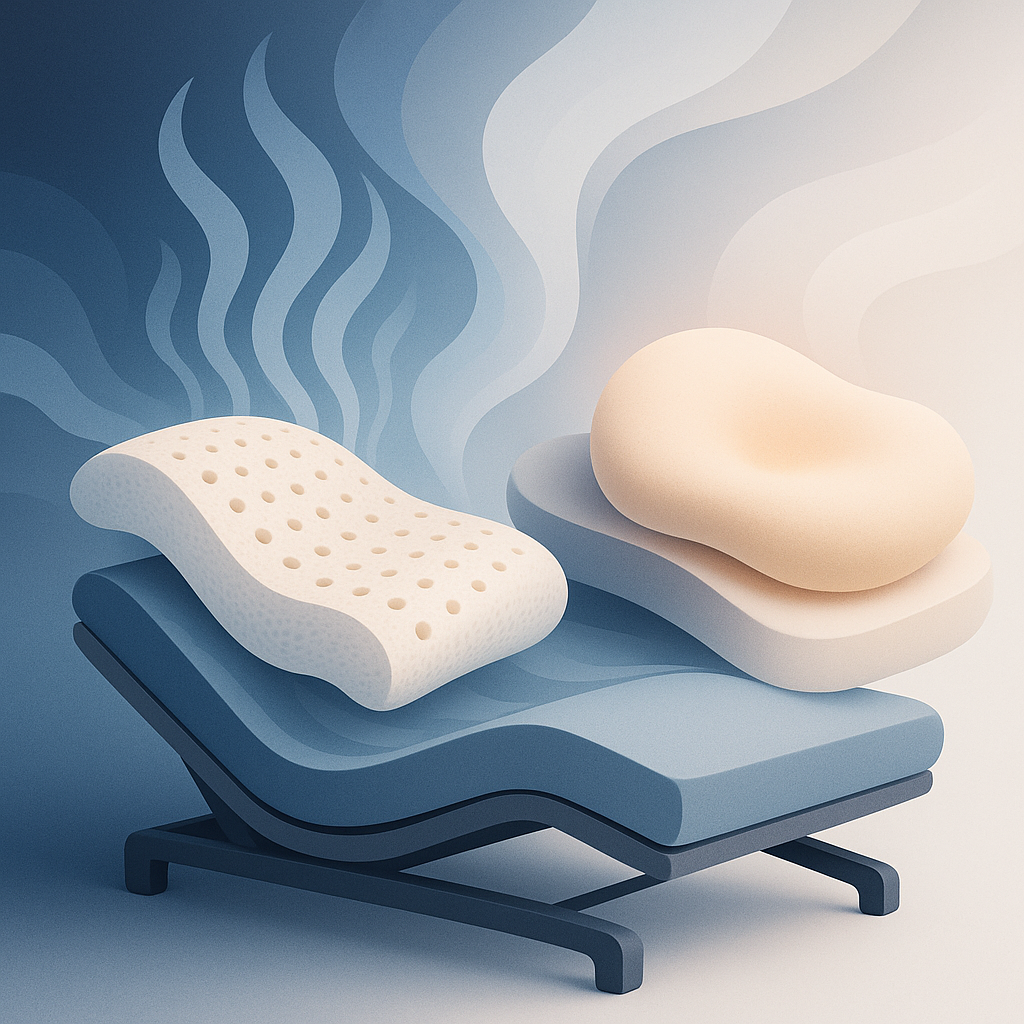
Natural Latex vs Memory Foam on Adjustable Bed Mattresses (Q4 2025 Update)
Memory foam mattresses trap heat due to their close body conformity, limiting airflow and creating a warm sleeping environment. Research shows memory foam retains heat while natural latex dissipates it quickly. Additionally, creep acceleration increases with higher temperatures, causing memory foam to sag faster when warm, creating a problematic cycle on adjustable beds.
At a Glance
• Memory foam's close conformity restricts airflow, leading to heat retention that disrupts sleep quality on adjustable beds
• Scientific studies confirm temperature-dependent creep acceleration causes memory foam to sag faster at higher temperatures
• Natural latex maintains structural integrity 15-20 years versus memory foam's 6-7 year average lifespan
• Gel-infused memory foam doesn't retain less heat than regular foam despite marketing claims
• Latex's open structure promotes airflow, with interface temperatures measured at optimal 15.5-20°C for sleep comfort
• Both materials flex well on adjustable bases, but latex maintains support integrity longer under repeated articulation
Choosing between natural latex and memory foam for your adjustable bed has never been more important. With the adjustable bed bases market expected to grow at over 8% CAGR, shoppers face a critical decision that will affect their sleep quality for years to come.
This guide breaks down the key differences between these two popular mattress materials, with a particular focus on heat retention and sagging, two issues that matter most when you're investing in an adjustable sleep system.
Why Does the Natural Latex vs Memory Foam Debate Still Matter for Adjustable Beds?
When shopping for a mattress, you can choose from three primary types: "foam (memory foam, polyfoam, latex foam, or a combination), innerspring, and hybrid (a mix of foam and springs)," according to NYT Wirecutter. Each material behaves differently on an adjustable base, and that behavior directly impacts your nightly rest.
Overheating during the night often interrupts sleep and causes discomfort. This makes temperature regulation a primary concern for adjustable bed buyers, especially since articulating positions can increase body contact with the mattress surface.
Memory foam tends to trap heat, which is likely to make you wake with a sweaty start. Meanwhile, the adjustable bed market continues expanding as more consumers prioritize ergonomic sleep solutions for managing back pain, acid reflux, and circulation issues.
Key takeaway: Your mattress material choice determines whether your adjustable bed delivers restful sleep or restless nights marked by overheating and inadequate support.
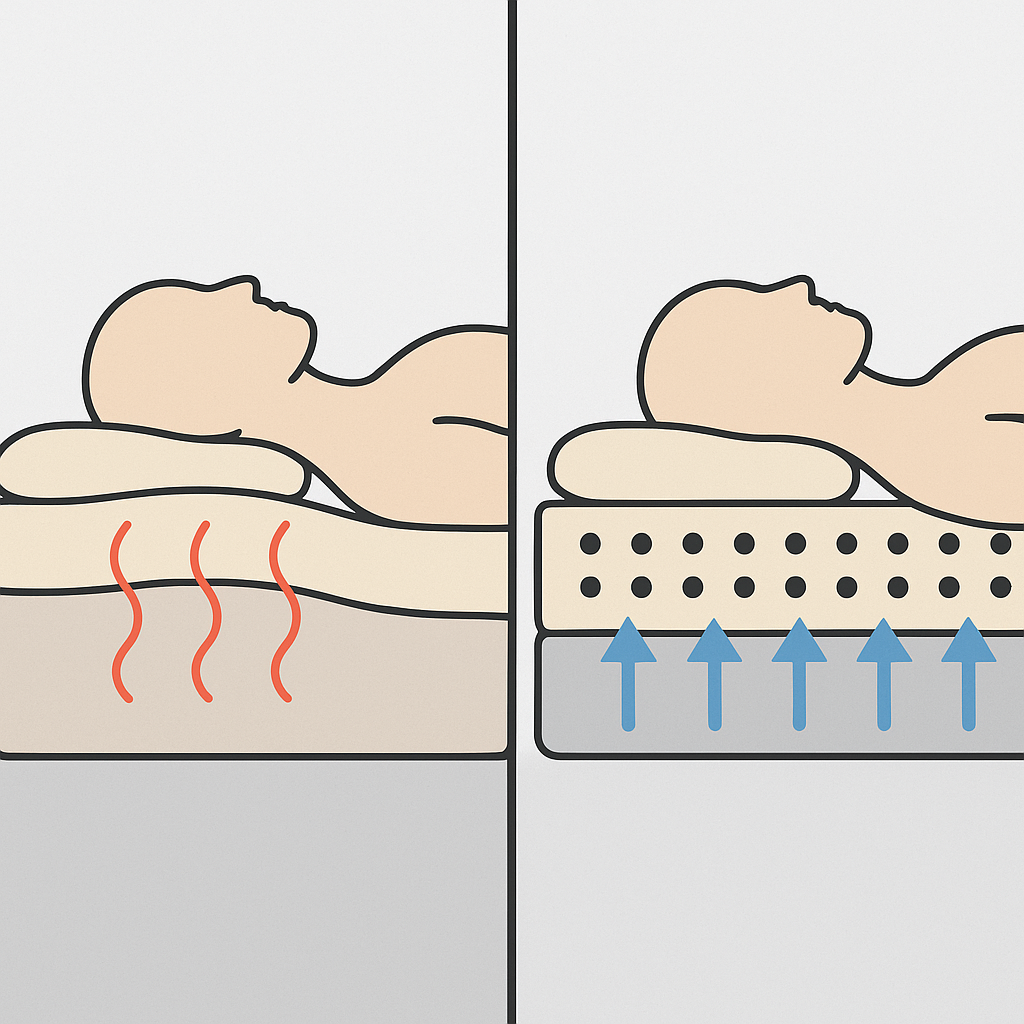
Heat Retention & Temperature Regulation: A Thermal Face-Off
How do latex and memory foam handle the heat your body generates throughout the night? The differences are significant.
Memory Foam's Thermal Challenge
Traditional memory foam tends to retain heat and trap it against the body. This occurs because memory foam conforms closely to your shape, limiting airflow around the sleeper. The result is a "sleeping in" rather than "sleeping on" sensation that many find uncomfortably warm.
Some newer formulations use an open-cell structure or infusions of gel, graphite, or copper intended to disperse excess warmth. However, research from Consumer Reports debunks a common myth:
"Gel foam mattresses are cooling? Truth: They don't necessarily retain less heat than nongel foams. That's because while gel-infused foams might feel cool to the touch at first, they'll eventually warm up with extended exposure to body heat."
Latex's Cooling Advantage
Latex doesn't hug closely to the body, so heat generally dissipates quickly and easily. Research published in Indoor and Built Environment found that woollen fabric and polymeric foam evaluated as optimal cushion materials showed interface temperatures measured at 15.5 and 20°C, demonstrating how material choice directly affects thermal comfort.
Latex mattresses sleep cooler than memory foam due to their naturally breathable structure and often include ventilation perforations for additional airflow.
Quick Comparison: Temperature Control
| Factor | Memory Foam | Natural Latex |
|---|---|---|
| Heat retention | High | Low |
| Airflow | Limited | Excellent |
| Body conformity | Close hug, traps heat | Surface contact, dissipates heat |
| Cooling tech effectiveness | Limited long-term benefit | Not typically needed |
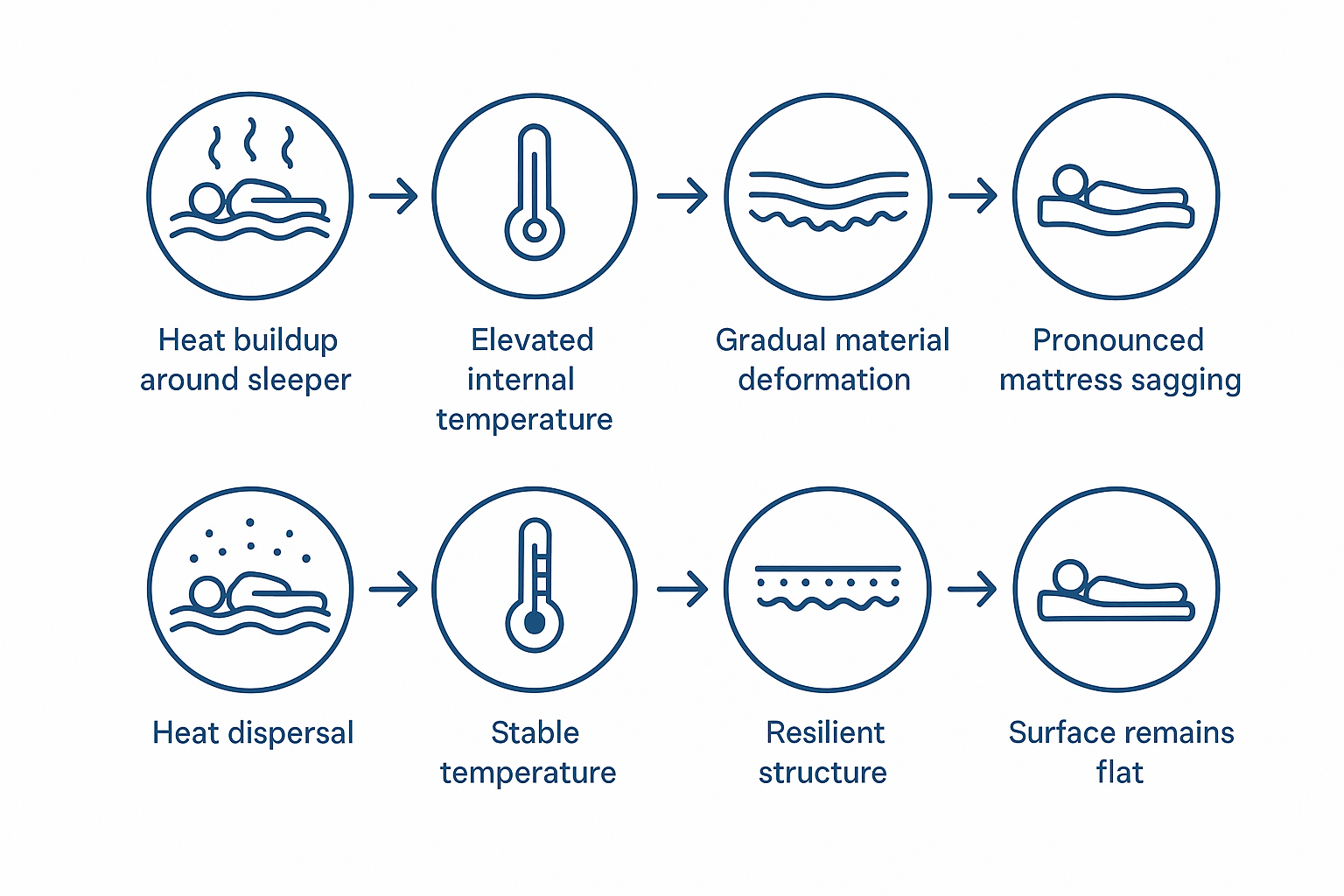
Sagging & Creep: Which Mattress Keeps Its Shape?
Durability matters significantly on adjustable beds, where constant flexing can accelerate material breakdown.
The Science of Memory Foam Degradation
Peer-reviewed research from Polymer Testing journal confirms that "compressive creep gradually affects the structural performance of flexible polymeric foam material over extended time periods." Viscoelastic polyurethane foam (memory foam) exhibits augmented viscoelastic effects compared to conventional polyurethane foam.
Critically, results were found to be strongly temperature dependent, as creep acceleration corresponded to higher temperatures. This creates a problematic cycle: memory foam retains heat, and that retained heat accelerates the sagging process.
Latex's Structural Resilience
Latex comfort layers are the most durable, and within that material type, Dunlop tends to outlast Talalay. According to NYT Wirecutter, "compared with memory foam, all-latex mattresses or innersprings topped with latex are more resistant to sagging and body impressions, regardless of a person's weight."
The lifespan of a latex mattress is impressive, typically ranging from 15 to 20 years.
Durability by the Numbers
| Mattress Type | Average Lifespan |
|---|---|
| Natural latex | 7.5 to 8.5 years |
| All-foam (memory foam) | 6 to 7 years |
| Hybrid | 6.5 to 7.5 years |
| Innerspring | 5.5 to 6.5 years |
Note: These figures represent when mattresses maintain optimal support. Premium latex mattresses can last 15 to 20 years with proper care.
How Do Latex and Memory Foam Mattresses Flex on Motorized Bases?
Adjustable beds require mattresses that can bend repeatedly without structural damage.
Memory Foam Compatibility
According to GhostBed, "memory foam mattresses are the ideal mattress to pair with your adjustable base" due to their flexibility. Memory foam provides pressure relief and conforms well to changing positions.
However, the same flexibility that makes memory foam bend easily can contribute to faster breakdown when combined with heat retention issues.
Latex Performance on Adjustable Frames
Latex mattresses are an ideal choice for adjustable beds due to their resilience and durability. The material's natural elasticity allows it to flex with head and foot articulation without developing permanent body impressions.
One important consideration from Spindle Mattress: "Avoid value options which use a metal grid or wire to support the mattress." Latex performs best on solid platform adjustable bases.
Adjustable Bed Benefits
Adjustable beds allow you to change the angle of the head or foot of your bed, which can help address sleep issues like:
- Snoring
- Swelling
- Joint pain
- Limited mobility
- Acid reflux
Electropedic's WH2 Adjustable Bed comes with a 20-year limited warranty, reflecting the durability standards that quality adjustable bases should meet.
Are Off-Gassing and Allergy Risks Higher with Memory Foam?
Health-conscious shoppers should understand the chemical and allergen profiles of both materials.
Memory Foam Off-Gassing
"New mattresses, especially foam ones that have been wrapped in plastic, can give off an unpleasant odor. This is the mattress off-gassing, or releasing volatile organic compounds (VOCs)," explains NYT Wirecutter. While most off-gassing dissipates within days, sensitive individuals may experience irritation.
Natural Latex: A Different Profile
Natural latex is produced from the sap of rubber trees. It's a natural product, and is biodegradable. This plant-based origin means fewer synthetic chemicals in your sleep environment.
However, latex does carry one consideration: roughly 1% of people experience some kind of allergy to latex. If you have a known latex sensitivity, memory foam or hybrid options may be safer choices.
For most shoppers without latex allergies, natural latex mattresses made from rubber tree sap are biodegradable and come with environmental certifications like GOLS and GOTS that ensure organic sourcing and responsible manufacturing.
What's the 2025 Cost of Ownership for Latex vs Memory Foam?
Upfront price tells only part of the story. True cost includes replacement frequency and warranty coverage.
Initial Investment
Latex mattresses are expensive compared to memory foam options. You'll typically pay 20-40% more for a quality latex mattress than a comparable memory foam model.
However, more expensive mattresses aren't necessarily more durable, so don't assume a mattress' price tag predicts durability. Material quality and construction matter more than brand prestige.
Long-Term Value Analysis
| Factor | Memory Foam | Natural Latex |
|---|---|---|
| Initial cost (Queen) | $800-$2,000 | $1,200-$3,000 |
| Average lifespan | 6-7 years | 7.5-8.5+ years |
| Typical warranty | 10 years | 20 years |
| Cost per year (mid-range) | ~$200 | ~$150 |
| Replacement cycles over 20 years | 3 mattresses | 2 mattresses |
The average mattress lasts between 7 and 10 years, but some mattresses have a lifespan that's years shorter or longer than that. Latex consistently falls on the longer end of this spectrum.
Key takeaway: While latex requires higher upfront investment, its extended lifespan often delivers better value over a decade of use.
Key Takeaways for Adjustable-Bed Shoppers in Southern California & Arizona
After examining heat retention, durability, flexibility, health factors, and cost, natural latex emerges as the stronger choice for most adjustable bed buyers. Here's why:
- Temperature: Latex dissipates heat; memory foam traps it
- Durability: Latex resists sagging for 15-20 years; memory foam shows impressions sooner
- Flexibility: Both work on adjustable bases, but latex maintains integrity longer
- Health: Natural latex offers fewer chemical concerns for most users
- Value: Higher initial cost, but lower cost per year of use
For shoppers in Southern California and Arizona, where warm nights are common, latex's cooling properties become even more valuable.
Electropedic Beds, California's oldest adjustable bed manufacturer and still family-owned since 1964, offers both adjustable bases and Latexpedic natural latex mattresses designed to work together. Their WH2 Adjustable Bed features a Wall Hugger Design with a 20-year limited warranty, and their factory showrooms in Burbank and Phoenix allow you to test the latex-and-adjustable combination before buying.
Unlike online mattress retailers, Electropedic provides local delivery, professional installation, and lifetime service support, ensuring your investment in better sleep is protected for years to come.
Frequently Asked Questions
What are the main differences between natural latex and memory foam mattresses?
Natural latex mattresses are known for their breathability and durability, offering a cooler sleep experience and lasting longer than memory foam. Memory foam, while flexible and conforming, tends to retain heat and may sag over time.
How does heat retention affect sleep quality on adjustable beds?
Heat retention can lead to discomfort and interrupted sleep. Memory foam tends to trap heat, which can be problematic for those who sleep hot, while natural latex dissipates heat more effectively, providing a cooler sleep environment.
Why is durability important for mattresses on adjustable beds?
Adjustable beds require mattresses that can withstand frequent bending and flexing. Natural latex is more durable and resistant to sagging compared to memory foam, making it a better long-term investment for adjustable beds.
Are there any health concerns associated with memory foam mattresses?
Memory foam mattresses can off-gas volatile organic compounds (VOCs), which may cause irritation for sensitive individuals. Natural latex, being a plant-based product, generally has fewer chemical concerns, though it may not be suitable for those with latex allergies.
What is the cost comparison between natural latex and memory foam mattresses?
Natural latex mattresses typically have a higher upfront cost but offer better long-term value due to their durability and longer lifespan. Memory foam mattresses are less expensive initially but may need to be replaced more frequently.
Sources
- https://www.sleepfoundation.org/research-methodology/temperature-control
- https://www.sciencedirect.com/science/article/abs/pii/S0142941812001262
- https://www.consumerreports.org/home-garden/mattresses/buying-guide/
- https://www.mordorintelligence.com/industry-reports/adjustable-bed-bases-market
- https://www.nytimes.com/wirecutter/guides/buying-a-mattress/
- https://www.nytimes.com/wirecutter/reviews/best-mattress/
- https://journals.sagepub.com/doi/10.1177/1420326X20903375
- https://www.tomsguide.com/reference/what-is-a-latex-mattress
- https://www.sleepfoundation.org/research-methodology/durability
- https://www.plushbeds.com/blogs/green-sleep/latex-mattresses-and-durability-how-long-can-you-expect-them-to-last
- https://www.ghostbed.com/pages/choosing-an-adjustable-bed-mattress
- https://www.latexforless.com/blogs/latex-for-less-blog/how-an-adjustable-bed-enhances-your-latex-mattress
- https://spindlemattress.com/blogs/faq/adjustable-bed-compatibility
- https://www.sleepfoundation.org/best-mattress/best-mattress-for-adjustable-beds
- https://electropedicusa.com/
- https://www.goodbed.com/guides/mattress-types/latex-mattresses/
- https://www.latexforless.com/blogs/latex-for-less-blog/latex-mattress-longevity-and-sustainability
- https://www.sleepfoundation.org/mattress-reviews/latex-for-less-mattress-review